Journal


Entries in Kyushu (5)

Tuesday
Nov082011

Miss Universe Japan

    In a recurring dream, I find myself the Lord of the island of Kyûshû and the inner palace, the Ôoku, is filled with these gorgeous women, the finalist of the Miss Universe Japan, Kyûshû round. Needless to say, I usually wake with "a skip in my step". 

   While all of these beauties are winners in my book, only one of them, to be chosen November 27, will go on to compete in the national contest later next spring. 

   Best of luck to all of you! 


   P.S. In the event that you are not chosen, you always know where you can go for some comforting.

Wednesday
Jun292011

Lights out, Fukuoka

   Following the Fukushima nuclear accident, concerned citizens throughout Japan have demanded that the nation's nuclear power plants be shut down until the safety of the reactors can be determined. In Kyûshû, where some thirty percent of electricity production comes from nuclear power, this has meant residents, businesses, and governmental bodies have been asked to conserve energy by 15% during the summer months when demand for electricity peaks.

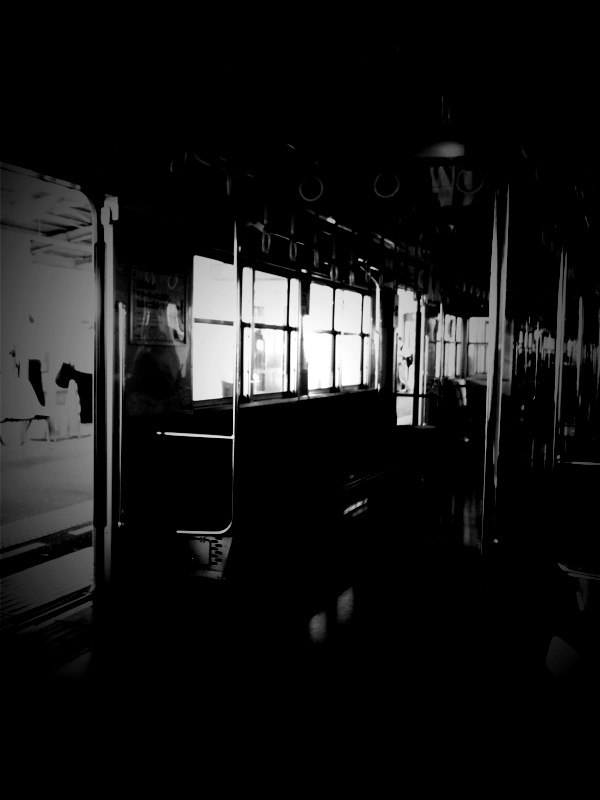
   Efforts to lower demand can be seen everywhere. Public offices have raised the thermostats on their air conditioners to 28℃ (82.4°F), and turned off the air conditioning completely in half of the city's subway stations. Interior lights on trains (pictured above) and university hallways have also been turned off.

   In a country where an abundance of illuminated billboards and flashing neon lights ensures that it is bright enough for a person to read a newspaper outside in the middle of the night, this new darkness will take some getting used to. 


Tuesday
Jun072011

Karatsu

   Saga isn't what many people would consider Japan's most exciting prefecture. It's the kind of place you've got to pass through when traveling somewhere else, which in my case is Nagasaki in the west or Kumamoto and Kagoshima in the south. That said, there are a few places in Saga that are worth visiting, one of which is the town of Karatsu.

   An hour's drive from Fukuoka, or about an hour and half from Tenjin (Fukuoka City) by local train, the small coastal town is easily accessible and provides a interesting day's worth of sightseeing.

   At the heart of the city is Karatsu castle, a beautiful white-washed structure rising above a promontory. Known as the "Dancing Crane Castle" (舞鶴城 Maizuru Jō), the original castle was constructed from 1602 to 1609. 

    The donjon pictured to the right is unfortunately a reconstruction. Like so many of Japan's once great castles, the original Maizuru Jô was destroyed after the feudal han system was abolished in the late 1800s in an ill-conceived attempt to eradicate vestiges of the former ruling system.

   Like many provincial towns, though, Karatsu offers a nostalgic glimpse at what Japan once looked like before the economic bubble of the 80s when life was simpler, less uncertain. Bus stops, diners, and beauty salons are little changed. You can't help but feel as if you've stepped back in time to the Shôwa Period. 

   As you might expect with similarly historic towns, in the vicinity of the castle, you can still find some of the so-called "quietly dignified" residences of the former samura class. Known as buke yashiki (武家屋敷), the homes are often surrounded by distinctive stone walls, sometimes with hedges atop, recessed entrances, and beautifully manicured gardens. In the city of Chiran in Kagoshima prefecture, most of these homes are open to the public. In Karatsu, however, I couldn't tell if any of them were. 


    Throughout Karatsu there are buildings dating back to the Edo, Meiji (See Karatsu BankTaishô, and Shôwa eras that are have been fairly well maintained. That's often the case in Japan, though, isn't it? It's in the backwaters where the wealth of the postwar boom years failed to trickle down that many of the better examples of architecture can be still found. There wasn't the mad dash after cash so common elsewhere that motivated property owners to bulldoze their cultural heritage and replace it with shabby condominiums, parking garages, or pachinko parlors.

   Recommended times to visit Karatsu depend upon what you'd like to do there. The summer months can be rather nice. There is a long stretch of beach that's not nearly as crowded with sunbathers on weekends as the beaches in the suburbs of Fukuoka city can be. The water is cleaner, too. Some the hotels even rent rooms for the afternoon so you can shower and rest after playing on the beach all day.

   Karatsu's biggest event of the year, the Karatsu Kunchi festival, falls around the Culture Day holiday (Nov.3). While not as exciting as, say, the Yamakasa Gion festival in Hakata (Fukuoka City), it makes traveling all the way to this town worth the while.

Tuesday
May172011

Kiri

   And while I'm on the topic of things being shrouded, most of northern Kyûshû was blanketed in a thick fog a week ago Sunday. It started to roll in just after one in the afternoon and by evening most of the city was enveloped in it.

   In spite of Fukuoka's proximity to the sea and being surrounded on all sides by reasonably high mountains, fog is a rare occurrence. I'm no meteorologist, so I won't venture any guesses as to why this is so. I will, however, offer this up as an another example of how oddly the weather has been acting lately.

   We had an unusually chilly, dry April. But just as people started to worry about the level of water in the local dams, the weather changed lickety-split. Within a matter of days, we were soon experiencing weather more typical of the late rainy season in mid July: it was unbearably hot and humid, and, as a friend put it, wetter than an otter's pocket.

   I heard that the Kanmon Straits which separates the island of Kyûshû from Honshû, was closed to shipping as the thickness of the fog made it impossible to navigate the waters safely. Would like to have gotten some shots of it.  

Wednesday
Mar022011

Hita


   Hita, a small city located in the western part of Ôita Prefecture, was in olden times what was known as a tenryo town. During the Edo Period (1603 to 1868) tenryo towns were under the direct control of the Tokugawa Shogunate and charged with keeping an eye on the happenings of outlying feudal domains.

   The neighborhood of Mameda Machi in the center of Hita's old town was a major hub of politics and commerce in Kyûshû during the Edo Period.

   Although the area has suffered three major fires over the centuries, many of the houses still look pretty much as the did in the early Edo Period, with their white washed walls and decorative wall paintings, called kotei-e. (Minus all the souvenir shops and busloads of geriatric tourists, of course.)


 The umé were in bloom throughout the town, filling the air with their sweet fragrance. Even on a day as cold as today was, just seeing these blossoms remind you that spring is around the corner, so hang in there.

At first, I thought the wall of this house had been decorated with stones. On closer inspection, however, I realized that the "stones" were actually clay bricks. 

 Zôri, anyone?

 A shop selling wood and bamboo crafts. I was more impressed with the handwritten signs on each item than I was in the actual merchandise. 

 I wanted to go inside this building, but my father-in-law was eager to push on. 

 A close-up of the same building.

 The Kunchô Sake Brewery. Built in the Taishô Era (1912–1926), the design incorporates both traditional Japanese building techniques and western influences.

   March third is Girls Day in Japan, (every day is Girls' Day in my heart), a day on which parents decorate their homes with traditional Heian Period doll sets (hina ningyô) and plum blossoms and pray for the safety and happiness of their daughters. Superstition has it that your daughter's marriage will be postponed if the dolls continue to be displayed after March fourth, so people usually take the dolls out of storage in February.

   Throughout Hita you'll find hina ningyô on display in private homes, restaurants, and shops during the festival.