Wednesday
Feb142018
New URL
 Wednesday, February 14, 2018 at 10:34AM

For the latest blog posts, articles, and other writing, check out my new website here: https://www.aonghas-crowe.com/

Wednesday, February 14, 2018 at 10:34AM
For the latest blog posts, articles, and other writing, check out my new website here: https://www.aonghas-crowe.com/
Friday, August 11, 2017 at 8:09AM

A very, very nice surprise this morning.
My latest work, Kampai, has managed to break the top ten in Japan.
I'm not crazy about the cover, to be honest. And, the final product is very different from what I intended to write, but, but, but, there's still a lot of interesting information thrown in with anecdotes of my life in Japan. A Kampai! 2 is in the works, and may come out perhaps next year.
Lemme tell ya, this has been perhaps the most productive nine months of my life. In addition to the dozen or so articles I have written for a number of different sites, mags, and journals, I have pumped out:
a new novel (A Woman's Hand), rewritten another (Rokuban), gotten half done on a third (A Woman's Tears),

two works of nonfiction (Kampai, Boys Have Dingdongs),
a collection of essays and stories (I 🖤 FUK, due out soonish),
a photo collection (Covered),
and, two textbooks (Speak Up!).
(Phew!)
I hope the next 12 months will be as productive or more.
For more on my writing go here.
Kampai, Rokuban in Writing Life Sunday, May 7, 2017 at 8:27AM

Boys Have Dingdongs & Other Observations is a collection of about 150 mostly silly, occasionally moving conversations I had with my sons from the time they started speaking until the elder one graduated from kindergarten.
Although I originally intended to save this collection until the boys were twenty, after reviewing them during the spring break I decided that now was as good a time as ever to go ahead and publish it. The reaction from my son--he ended up sleeping with the book in his arms--told me that I had made the right choice.
Dingdongs is available as an ebook and paperback.
Friday, November 25, 2016 at 6:14AM

I am often asked why I came to Japan. I usually reply: “It’s a long story." Here's part of that story.
"Inhaling Water", a prequel to A Woman's Nails, offers a look into how one might forsake the Devil ye know for one ye don't.
Inhaling Water in Writing Life Thursday, February 18, 2016 at 11:30AM

I came across this earlier today:
"Grants of up to $2,500 each are given twice yearly by the Leeway Foundation to women and transgender, transsexual, genderqueer, or otherwise gender-nonconforming poets, fiction writers, and . . ."
Now, I'm all for gender equality, but I must say the above poses something of a dilemma.
See, writers, by profession, are liars. They just make shit up. They cannot be trusted to tell the truth.
Take Gabriel García Márquez. The shameless liar, wrote in his Memoria de mis putas tristes about a beautiful fourteen-year-old virgin falling in love with a ninety-year-old man. Yeah, right, Gabo! In your dreams, you dirty old man!
So tell me, how are you supposed to take one of these lying bastards (or bastardettes) at his (or her) word, when he (or she) says that he (or she) is "genderqueer", whatever that means.
Monday, November 9, 2015 at 9:29AM
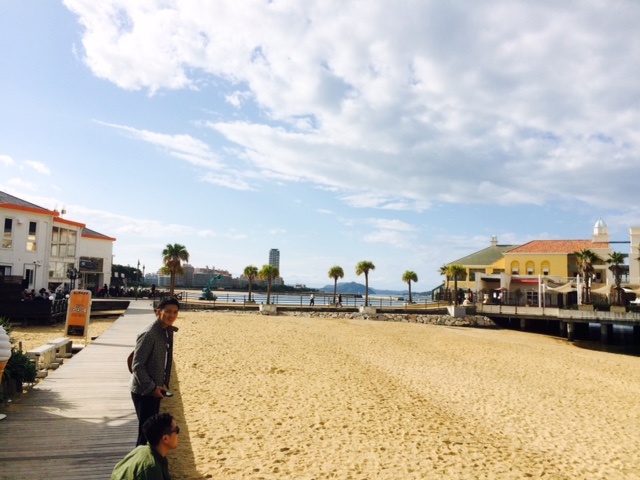
It was so warm yesterday--27℃--that my wife and I decided to take the boys to the beach. Only three weeks earlier we had done the very same thing, thinking it would probably be our last visit of the year. Thanks to global warming, or perhaps local warming, it wasn't. And, it may possibly won't be our last.
According to the news, the arrival of the autumn hews, what the Japanese call kōyō (紅葉, lit. "red leaves"), is now fifteen days later than it used to be fifty years ago. Thanks to this warming trend, we are now able to come to the beach eight months of the year, something that is both pleasant and terrifying at the same time.
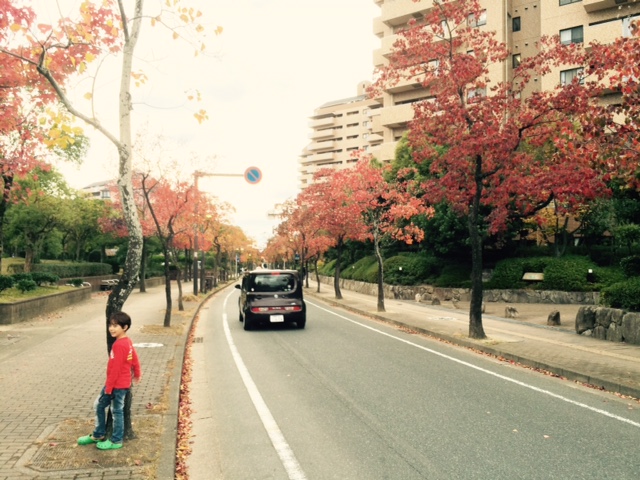
Better late than never.
Momochi Hama, beach, global warming, koyo, 温暖化, 福岡, 紅葉 in Environment, Fukuoka Thursday, October 8, 2015 at 4:12PM
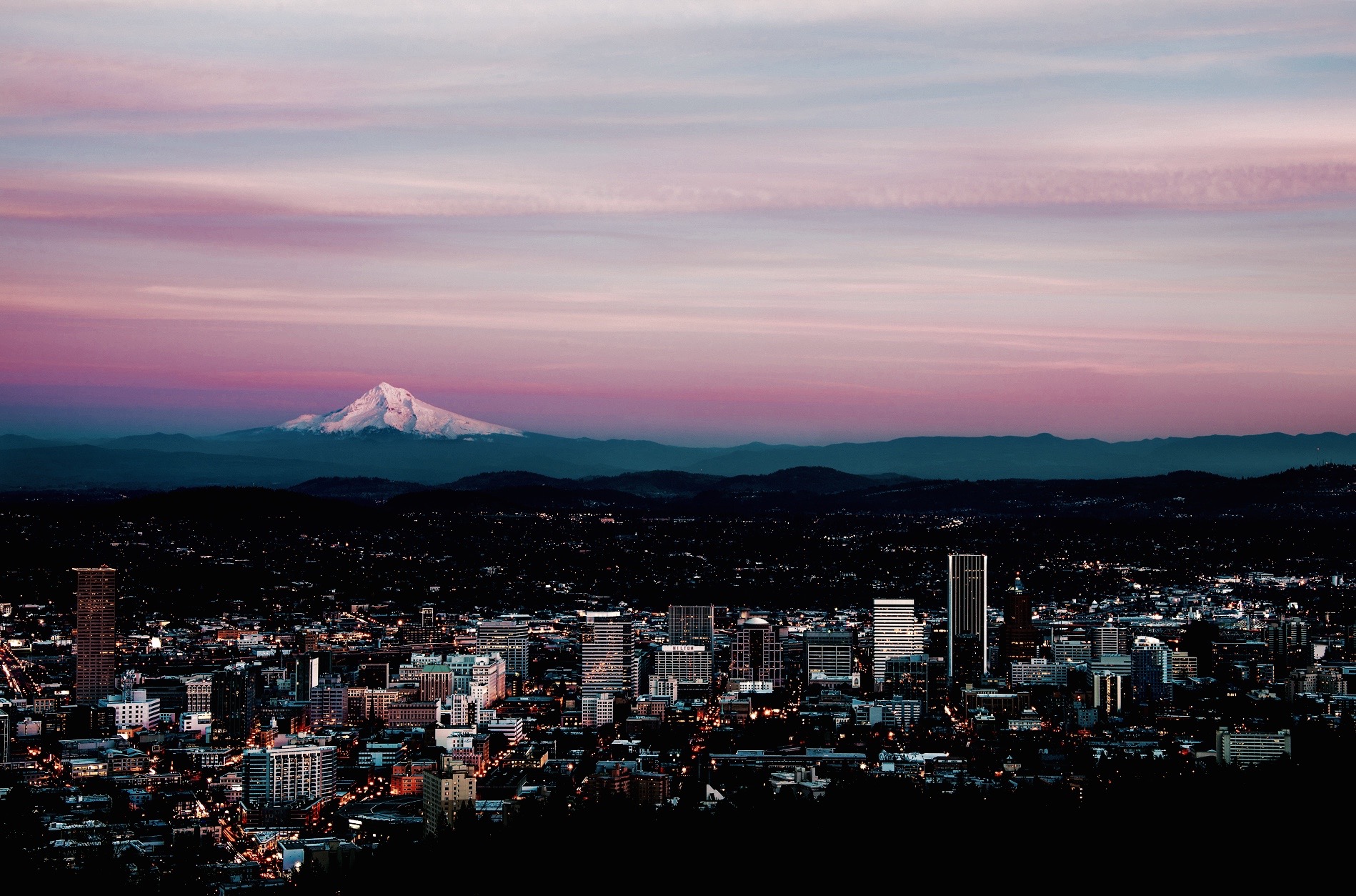 I was in Portland for the first half of September. This is the tally after my first week there. (I have included the corresponding numbers after a week back in Japan.)
Oregon, PPortlandia, Portland in Off Beat, Portland, Traveling in the US Thursday, September 17, 2015 at 5:30AM

A friend asked me, "How could anyone vote for a guy with an accent like that? He sounds like Rodney Dangerfield under the influence..."
The guy in question is Bernie Sanders.
To be honest, I don't mind the way Bernie sounds. I think a populist needs to have a unique voice like his, one that lends the speaker the air of a back alley pugilist. The voice of Democratice Senator Sherrod Brown of Ohio fits the role perfectly.
I may have mentioned this before, but I usually "listen" to the news via podcasts, rather than "watch" it, and I often find myself asking, "Do I really want to listen to that voice for the next four years?"
No disrepect to Democratic favorite, Hillary Clinton, but her voice grates on my nerves. And the woman couldn't deliver a punchline even if her life depended on it. (David Brooks made a funny comment last week that Hillary will be coming out with a plan in a week's time to be more spontaneous.)
Jindal sounds like he has his mouth full o' grits whenever he talks. How could the Chinese ever negotiate with him? "Mr. President?" Mumble, mumble. "Mr. President?" Munch, munch. "Mr. President?" Yes? "Are you finished eating?"
Rubio sounds like the student body president of an all-boy Christian high school who mistakenly put his chastity ring on his tiny weenie.
Cruz's voice has all the appeal of a table saw stuck grinding away on a rusty nail.
Donald Trump's voice is both annoying and entertaining at the same time. It's your fiftieth hit of meth when you know deep in your heart that you should just put the pipe down and get some goddamn sleep for once.
Perry sounds too much like W. Thank God the Lord spoke to this Christian soldier loud enough that he finally got the hint and stepped out of the race. "Guess I shouldn' a tried runnin' again. Oops."
Lindsey Graham? Oh, dear, no.
Santorum sounds like he was just shown a photo of three adults have inappropriate sexual contact with each other and doesn't know whether to be titilated or disgusted by it all.
Christie should be at the end of a counter at a sports bar in Jersey, wearing a Joe Namath jersey, a Bud Lite in his meaty hand, rather than on a debate stage.
Rand Paul has a dry whiny voice; he sounds like he'd scream "Uncle" even before the titty-twister commenced. And you expect him to look into Putin's eyes and . . . "Uncle!"
I could go on and on and on.
Monday, April 13, 2015 at 5:35AM
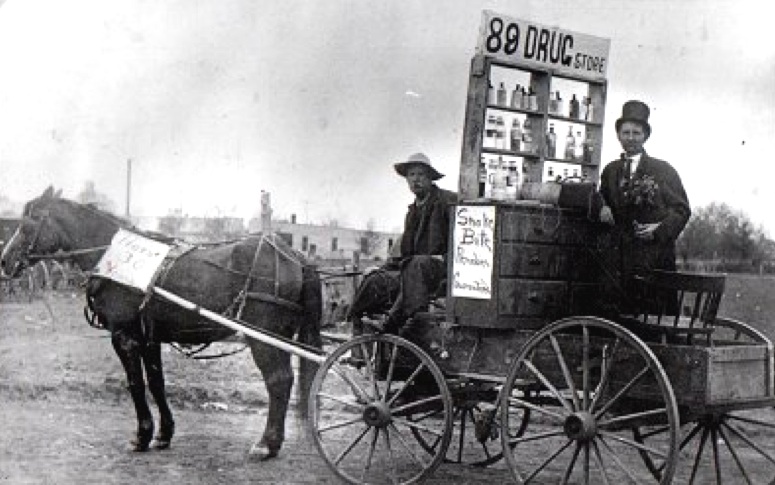 After cocktails and hors d’oeuvres, a fifty-something-year-old American man, someone I have never seen around town, taps on a microphone a few times then jumps right into his presentation.
From the get-go, it stinks of some multilevel marketing scheme and, looking around the room, I can see that it’s the same old crew that has come together to push it: guys who were doing Amway, then NuSkin, then Noni. And now they’re gung-ho about something called Rexall Showcase: a new name to the old scheme of pushing overpriced supplements and dubious weight loss products on family and friends and kicking the profits up the pyramid.
“This is the opportunity you’ve been waiting for, folks!” the speaker exclaims. “This is The Golden Opportunity! The chance to get into a business when it’s just getting off the ground. Amway, NuSkin, yes, they’re all good business models, excellent business models, in fact, but if you really want to make money with them, why, you should have gotten into the business twenty, thirty years ago. Folks, I’m tellin’ ya, Rexall Showcase is the opportunity you’ve all been dreaming about!”
As I listen to him, I must admit that what he is saying doesn’t completely lack merit. Imagine being able to have entered into a business like Amway when it was first taking off, before overeager fools irretrievably ruined its reputation. But today? Try to become a millionaire in Amway today and you’ll probably die trying. Your hair and skin will look fantastic, though. You might even feel fantastic, too, if you can manage to swallow their horse-pill sized megavitamins.
The American tells us he has been living in Japan for over thirty years, longer than anyone else in the room. “I’ve been here since Nixon was president!”
Laughter.
“And all these years, I have been running a business. Several businesses, in fact!”
He’s quite successful, he assures us, saying that he even supplies Fukuoka Airport with his products.
There are oohs and ahs.
“And, let me tell ya, folks, I know a good opportunity when it comes up from behind me and kicks me in the ass.”
More laughter.
The American talks like a snake oil salesman, but the others in the room eat it up; so eager they are to get their grubby little hands on cold hard cash that what he is saying must sound like the sweetest of music to their ears.
And then, he invites a long-haired douchebag by the name of Clive up to the front and says, “Clive has been blowing us away . . . Tell me again, how much did you earn last month?”
“Two million yen.”
There are whistles of astonishment and why wouldn’t there be? Two million yen for a month’s worth of work is a respectable amount of cash, twice what I am making, working what amounts to three jobs. But, why is this “very successful” guy dressed like someone who is only earning a tenth that amount? The Canadian, a former strip dancer at a “ladies’ club” that went bust years ago, is wearing ripped Levis, old cowboy boots, and a dowdy sports jacket. Any moment now I expect him to tear the jeans off and start jiggling his nuts.
“See, I told you it was fishy,” Akané whispers into my ear.
“Fishy doesn’t even begin to describe it. This is borderline fraud what they’re doing. Let’s get out of here.”
This is an excerpt from A Woman's Hand, a sequel of sorts to the novel A Woman's Nails. The novella was inspired by events which happened about fifteen years ago.
Wednesday, April 8, 2015 at 5:24AM

Blessed are the rich: for only they have earned the kingdom of heaven the hard way.
Blessed are the bold: for they shall possess the land and the mineral rights below the surface.
Blessed are they who rejoice in their success: for they shall be comforted in the lap of luxury.
Blessed are they that have eaten their fill: for they shall have seconds and thirds after they loosen their belts.
Blessed are the vengeful: for they shall mete out retribution upon the Darkies and have mercy on Whites with Affluenza.
Blessed are the conservative of heart: for they shall see God in their own likeness and it will be very good.
Blessed are the chickenhawks: for they shall be called the children of both Patriots and God.
Blessed are they that persecute others for law and order’s sake, for they will have the keys to the kingdom of heaven as well as the keys to the for-profit prisons.
Thursday, January 15, 2015 at 12:45PM
 HRP's campaign poster for the 2014 general election features party president, Shaku Ryōko. The former party head used to be Ōkawa Kyōko, the wife of Happy Science founder Ōkawa Ryūhō. Seems they failed to realize their happiness together.
The first time I heard of Happy Science was during the 2009 Lower House election that would had the long-ruling Liberal Democratic Party (LDP) a well-deserved drubbing.
One day during the 12-day campaign period before the election,[1] a noisy political sound truck sped past me with the usual contingent of white gloved hands waving out of the windows and the improbable name Kōfuku Jitsugen Tō (幸福実現党, The Happiness Realization Party, HRP) plastered on the side of it.
“You gotta be kidding,” I said to myself as I waved back listlessly to the enthusiastic lackeys in the van.
In 2009, there was no shortage of minor political parties with silly names, including “The Essentials”, “The Freeway Club”, “Japan Smile Party” and “The Forest and Ocean Party”, none of which would gain any seats in the election. The Happies, however, would press on election after election.
Curiosity getting the better of me, I did a bit of research into the party when I got home that day and I learned that HRP was the political wing of Kōfuku no Kagaku (幸福の科学, Happy Science), a cult founded in 1986 by Ryūhō Ōkawa.
According to an article in The Japan Times, “the Happies have an eye-catching manifesto: multiply Japan’s population by 2 1/2 to 300 million and make it the world’s No. 1 economic power, and rapidly rearm for conflict with North Korea and China. If elected, the party’s lawmakers will invite millions of foreigners to work here, inject religion into all areas of life, and fight to overcome Japan’s ‘colonial’ mentality, which has ‘fettered’ the nation’s true claim to global leadership.”
I don’t know about you, but it sounded to me as if the person who wrote the manifesto had been smoking meth.
Pipe dream or not, Kōfuku Jitsugen Tō fielded 345 candidates, or nearly one in each electoral district—more than the either the Democratic Party of Japan, which would go on to win the election, or the ruling Liberal Democratic Party—in the 2009 election, yet failed to win any seats in the National Diet. Further bids in 2012 and 2014 with a similar number of candidates also yielded zero seats. At a cost of 3 million yen per individual electoral district and 6 million yen per proportional representation block, The Happies have squandered almost six billion yen (over $50 million) over the past three campaigns.
Or have they?
If the real aim of these hopeless election campaigns has been brand recognition rather than electoral victory, then The Happies must be very happy indeed. Six years ago, I had never heard of either the cult or its leader, but now I have. I’m sure it is no different with your average Tarō in Japan.
Still, fifty-plus million dollars ain’t chump change. By comparison, Mitt Romney spent $42 million of his own money in his failed attempt to win the Republican nomination for presidential candidate in 2007-08, the second most spent by a candidate self-financing his run. All of this got me thinking how The Happies were able to finance not only their election campaigns, but also their construction boom which has seen several gaudy new palaces dedicated to the ego of Ōkawa erected throughout Japan over the past several years.
It’s hardly news that religions, old and new, are able to generate fabulous amounts of tax-free income, but to make money, they’ve got to have adherents to their faith.
According to Happy Science’s, the cult claims to have twelve million followers in ninety countries. I found this number to be highly dubious as it is the exact same figure claimed by another cult, Sōka Gakkai. Although considered a “new religion” in Japan, S.G. International has been around since 1930 and has its origins in Nichiren Buddhism, which itself dates back to the 13th century. Although, I do not know anyone who is a follower of Ryūhō Ōkawa, I have come across quite a few members of Sōka Gakkai over the years. The entertainment world in Japan is famously peopled with followers of the religion.
By comparison, the Mormons[2] have over 15 million followers and the Jehovah’s Witnesses have 8.2 million, thanks to both religions’ aggressive missionary work throughout the world and unfortunately at my doorstep.
The more I ruminated on it, the more Happy Science’s claim of twelve million believers just didn’t add up.
Then it hit me. I knew how to get a fairly accurate estimate of Happy Science’s followers in Japan: the results of the 2009 election.
In the proportional representation blocks, The Happiness Realization Party and Kōmeitō, the party closely tied to Sōka Gakkai, got the following number of votes:
Hokkaidō Block
20,276 votes for HRP vs. 354,886 for Kōmeitō
Tōhoku Block
36,295 vs. 516,688
Northern Kantō Block
46,867 vs. 855,134
Southern Kantō Block
44,162 vs. 862,427
Tōkyō Block
35,667 vs. 717,199
Hokuriku Block
32,312 vs. 333,084
Tōkai Block
57,222 vs. 891,158
Kinki Block
80,529 vs 1,449,170
Chūgoku Block
32,319 vs. 555,552
Shikoku Block
19,507 vs. 293,204
Kyūshū Block
54,231 vs. 1,225,505
The Happiness Realization Party garnered about 459,000 proportional representational votes, less than 6% of the 8,054,000 votes for the Kōmeitō, which suggests that The Happies actually have around 720,000 followers. After watching this video of Ryūhō Ōkawa’s great psychic power, it makes me wonder how he managed to even get that many.
Obviously, I'm in the wrong business.
[1] For more on elections in Japan, go here.
[2] The Church of Jesus Christ of Latter-Day Saints
Saturday, December 6, 2014 at 9:20AM
 The past ten years or so have really seen remarkable advancements in technology when you think about it. Just off the top of my head, I came up with the following list of products and services which not only did not exist a decade ago, but are for the most part indispensible today.
2001 Wikipedia
2003 Skype
2003 IEEE 802.11g, a.k.a. Wi-Fi
2004 iMac G5 with 40 to 500GB. 500GB??? Who would ever need that much storage?
2004 Toyota Prius introduced to US market.
2005 Youtube
2005 Google Maps
2005 Sunnyvale, CA, became first city in the U.S. providing citywide Wi-Fi for free.
2006 Facebook available to the general public
2006 Twitter
2006 Nintendo Wii
2007 iPhone
2007 Google Street View
2010 Instagram
2010 iPad
2011 Siri
2011 Line application
2015 iWatch
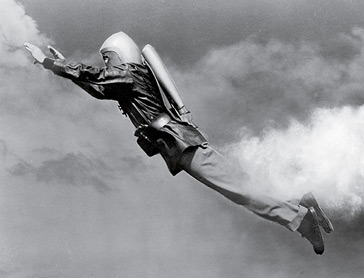
Makes you wonder what the next ten years will hold. Jetpacks anyone?
Saturday, November 22, 2014 at 6:53AM
 It was around the time of the earthquake and both Jean and I were at our very lowest. I was still depressed about the break up with Nacky, my cousin was living with me again, driving me up the wall, and money was tighter than ever.
Jean had closed all his shops but one, The Zoo, the one down the street from mine, and was struggling to keep that. I knew money had to be tight with him, too, because every now and then he would ask me to “invest money” in his company. I couldn’t help feeling that too many banks had already invested too much in his business and that model of an ever-growing business—grow or die, he liked to say—was coming back to haunt him. His business was dying.
Shortly before the earthquake, Jean had to give up his übercool apartment in the tony neighborhood of Hirao. That must have hurt. He had always made such a big deal about how he had been living for years “like a monk” in a very simple apartment with very few things cluttering up his life. But then, when business was going exceptionally well, Jean’s real estate agent told him that he needed to be living like a shachō, like the company president he was. He bought the Mercedes, got the apartment with the rent double my own apartment’s, and when I commented once about the running cost of keeping a car, the cost of say parking in it in town every day, he said, “Rémy, I never ask how much something costs. No, I ask myself, how can I afford it.”
I don’t know if he lifted that from a movie or a self-help book, but it sounded awfully cool to me. That was Jean, though, he could sum things up in one sentence, create a maxim you couldn’t easily disagree with. After that, I remember trying the same philosophy, but every time I asked myself, “How can I afford it?” It always sounded panicked, as if I were saying, “How in God’s name can I ever afford this?”
Jean was now asking himself the same thing and the answer was: he couldn’t.
He kept the car, but gave up the apartment. He closed most of his shops and even let go of his office building in Yakuin, moving into a more modest apartment in Imaizumi out of which he was now working. When I visited him, shortly after the move, the place was a disaster area. Products lay in disarray, furniture—his wonderful mid-century modern furniture—remained in boxes, a futon was thrown on one of the floors.
It wasn’t long thereafter that Nori left him. When I asked why, he told me that she had said it just wasn’t fun being around him anymore. “I tried to talk to the bitch about my problems, and they aren’t little, and she got tired of hearing it. Can you believe that? Excuse me for trying to confide in you! Forgive me for caring so much about you that I thought you’d be interested!”
He acted as though losing Nori was like water off a ducks back. It didn’t bother him, or so he claimed. He was, after all, now screwing a skinny 18-year-old American girl with huge tits.
“Hey, I’m going to getting together with Shinji later this week. Interested?”
I told him I wasn’t. I was pretty much off drugs by then, even the modafinl that had kept me going for years after quitting shabu was history.
I think it hurt losing Nori. The two of them had been together for almost five years and had had some very good times together.
Several months later, he would tell me that Nori and he had got back together and were going to get married.
“That’s great news!” I said.
It didn’t last, of course. The two of them were together for only a few months and then Nori split to never be heard from again.
And, so I started putting distance between myself and Jean, too. Where we once met two, three, even four times a week, we were now meeting only once in a blue moon. And every time we did I saw a man who was slowing falling apart. Maybe it was the drugs, maybe it was the stress of trying to do business in a struggling economy.
I met him one time and seeing that his hand was swollen and purple asked what had happened.
Oh this, he said, laughing. Then he told me how he was coming back from Itoshima where he had spent the day at the beach with a Russian chick. Some jerk behind him was on his tail the whole way back, riding his tail the whole way back. Jean let him pass, but when he did, the guy then slowed down to a crawl. When the two cars came to a red light, Jean jumped out of his car and ran to the driver’s seat, opened the door and started whaling away on the asshole’s face.
“You should have seen the look on his girlfriend’s face,” Jean said laughing. “Tell you one thing, that is the last time the bastards pulls something like that.”
At about the same time Jean told me another story.
He had been riding his bike in town and had stopped at an intersection, waiting to cross the street when a car, one of those sedans with the dark windows that the yakuza like to cruise around in, pulled up behind him and started honking its horn. Traffic was heavy, so there was nothing he could do but wait until it cleared up before he crossed the street but the bastard in the car behind him kept honking its horn.
“When I didn’t get out of the way, the car moved forward to nudge my bicycle, can you believe that? And get this, when it did so a second time, the car’s bumper rode the rear wheel of my bike and got stuck there. Well, I lost it then. I got of my bike, and it was still standing. Still standing! I started yelling at them, ‘Get the hell out of the car!’ But they wouldn’t get out. There were four of them, yakuza punks, and they wouldn’t get out of the car and that pissed me off even more, so I banged my hand down hard on the hood, and yelled, at them, ‘Get the fuck out of the car!’ But they still wouldn’t get out, so I kicked the headlight. Still they wouldn’t get out. Four tough yakuza pricks and they’re afraid of me, can you believe it? Well, I lost it, and I must confess, I was pretty high at the time and hadn’t been sleeping for a few days. So, finally, I yanked my bicycle free and tossed it onto the hood of their car. And when I was doing that, the road cleared up and they drove off. Pussies! They ran away.”
I’d probably run away, too, if a gorilla like Jean were attacking my car.
And that’s kind of the way it was for a while with Jean. Getting into fights with Nori and breaking up with her for good, bashing in the heads of strangers for riding his tail, smashing up a car that had bumped into him, chewing his staff out and firing them.
© Aonghas Crowe, 2010-2015. All rights reserved. No unauthorized duplication of any kind.
注意:この作品はフィクションです。登場人物、団体等、実在のモノとは一切関係ありません。
All characters appearing in this work are fictitious. Any resemblance to real persons, living or dead, is purely coincidental.
The complete version of No. 6 is now available for a variety of devices at Amazon's Kindle store.